Moving on: Interview with Tibor Hlédik, Lead Economist at the JVI
December 03, 2025
Tibor Hlédik has been with the JVI since 2017. On the occasion of his departure, we asked him to share his experience and views on the JVI, it challenges and achievements, and on his role in this process.
Tibor, can you give an overview of your role and key activities during your eight years with the JVI?
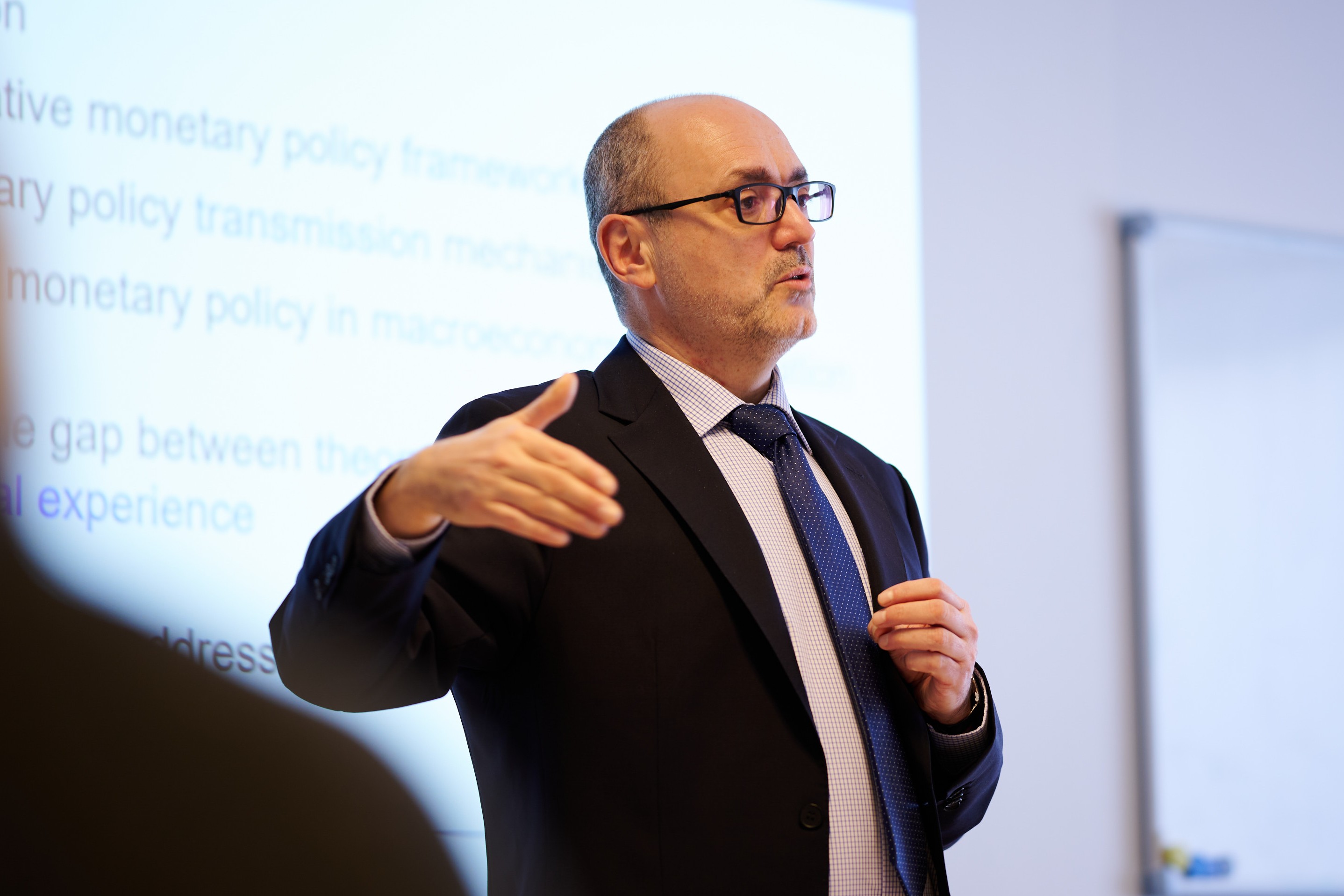
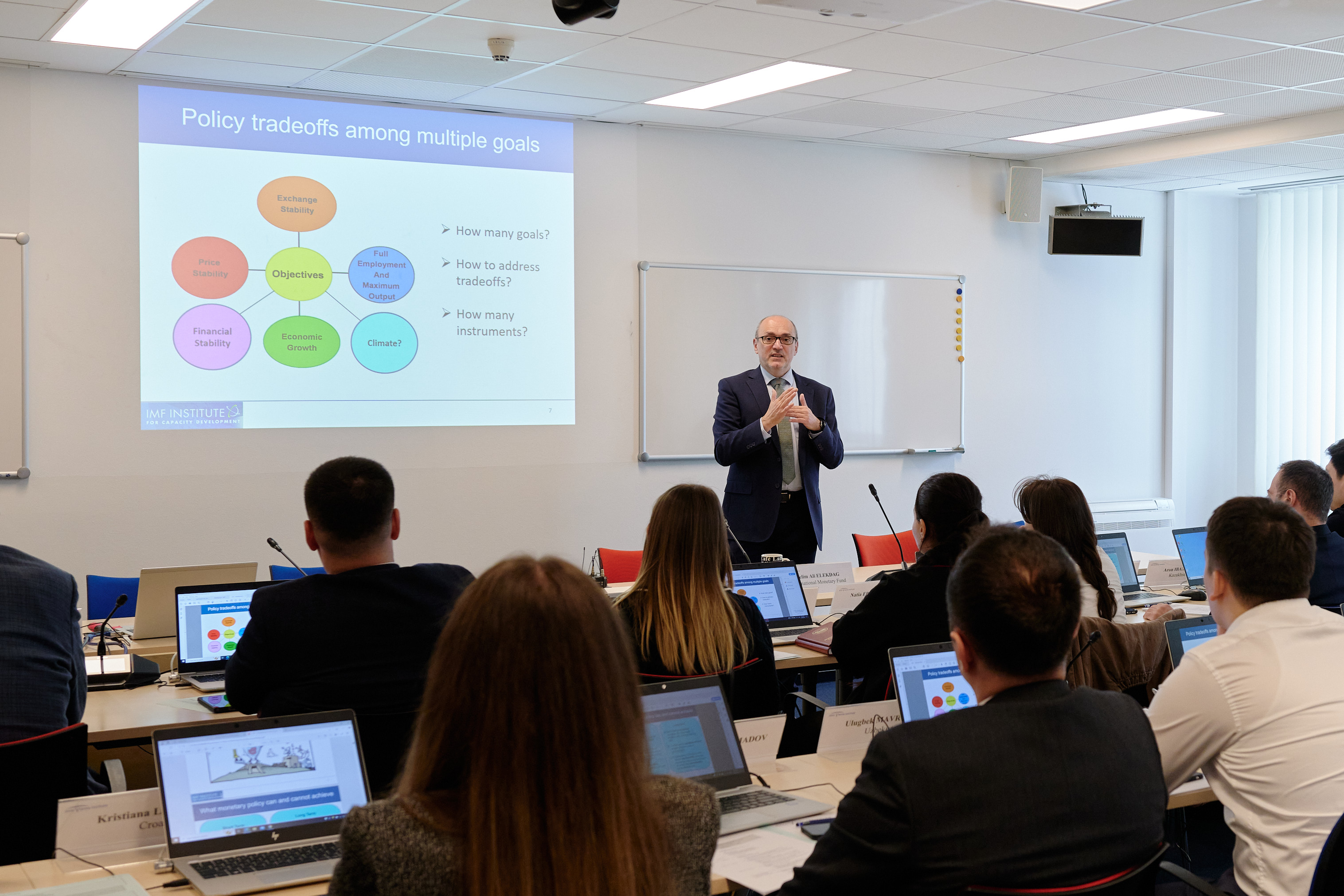
Over the past eight years at the JVI, my work centered on teaching and developing monetary policy and general macroeconomic courses, and I was actively involved in delivering several flagship IMF courses during this time, notably Model-Based Monetary Policy Analysis and Forecasting , Monetary Policy , Macroeconomic Management in Resource-Rich Countries, Macroeconomic Diagnostics , and Financial Programming and Policies.
In my teaching I drew extensively on my prior experience in monetary policy analysis and forecasting at the Czech National Bank and providing Technical Assistance to central banks in the Western Balkans, Central Asia, and Eastern Europe. These country experiences enriched my lectures with practical policy insights and real-world case studies. This hands-on perspective was particularly valuable in illustrating the design and implementation challenges of macroeconomic and monetary policy in diverse institutional settings.
Another important aspect of my work was curriculum development. I contributed to the design of new JVI courses and helped continually modernize existing ones to better reflect current policy debates and analytical tools. A highlight of this effort was the development of the Macroeconomic Management Issues segment within the Applied Economic Policy (AEP) course. This policy-oriented component of the AEP was very well received, with participants praising its relevance, practical focus, and integration of theory with policy application. Further, I was also involved in the Monetary Policy Communication course, which is delivered with the German and Austrian central banks. I am happy how this course has evolved to closely reflect and address the ever-evolving challenges in communication by central bankers.
How would you describe your work experience at the JVI? What makes JVI special?
Working at the JVI has been an exceptional experience. What truly makes the JVI special is its highly professional staff interacting with a diverse group of participants — professionals from Central, Eastern and Southeastern Europe, Caucasus, Central Asia, Iran and Türkiye. They have diverse institutional and economic backgrounds, coming from central banks, ministries of finance or economy, and other governmental organizations. The training at the JVI stands out for its hands-on, practitioner-oriented approach, while still maintaining academic rigor. This combination ensures that participants can immediately apply what they learn to real-world policy and economic challenges.
Another key strength is the outstanding training facilities generously provided by the Austrian authorities, which create an excellent learning environment. And of course, being based in beautiful, multicultural Vienna adds an extra dimension — it is an inspiring place to learn, teach, and connect with colleagues from around the world.
You have been with the JVI for eight years. How has it changed during this time?
The JVI has always been a dynamic place, and this remains one of its defining characteristics. Since teaching positions are not permanent, colleagues naturally rotate, and while this brings constant change, it also offers a major advantage: the opportunity to work with people from a wide range of professional and cultural backgrounds. That diversity is an inherent and enriching feature of the JVI.
One of the most significant changes I have observed—and one that can be attributed, at least in part, to the duration, reach and quality of the JVI’s work—is the rising professional level of public sector employees from our region who attend our courses. Over time, participants have come with increasingly diverse and advanced skill profiles. This has required us to adapt our course materials, but it has also allowed us to strengthen the peer-learning dimension of our programs, which has become one of their most valuable components.
Another notable change is the sharp increase in demand for new and emerging topics compared with the past. Policymaking institutions in our member countries face new challenges, and the JVI responded by expanding its course offerings accordingly —introducing many new programs to reflect these evolving needs. Overall, the JVI today is even more responsive, forward-looking, and engaged than it was eight years ago.
Was there a specific highlight for you during this period? Any anecdote you would like to share?
One of the most challenging—and memorable—periods of my eight years at the JVI was the start of the COVID-19 pandemic. Almost overnight, we were confronted with a fundamental question: How are we going to deliver our courses now? Together with a then JVI colleague, we decided to take on the challenge and convert one of our standard monetary policy courses into a fully virtual format.
Looking back, I still remember the sense of novelty and uncertainty as we prepared to teach online for the first time. We spent many hours redesigning materials and learning to use digital platforms that are now part of our everyday lives but were then entirely new to us. In the end, the JVI became the first IMF regional training center to deliver this course virtually. It was a demanding process, but also a rewarding moment that showed how quickly the JVI can adapt when circumstances change.
Rilind Kabashi, Senior Economist, Joint Vienna Institute